
Cats are recognized for being independent groomers. If you keep an eye on any cat long enough, you’ll see that they use their rough tongue to carefully clean themselves. Why, therefore, would a cat owner ever need to groom their animal companion? The answer is more frequent than you can imagine.
Persians and Maine Coons are examples of long-haired breeds that mat easily without frequent grooming. Cats who are overweight or older are unable to reach every part of their bodies. Additionally, almost every cat owner has had to deal with hairballs, which are adorable tiny gifts that your cat drops on the carpet. Frequent grooming helps prevent hairballs, maintains the quality of the coat, and allows you to identify health issues early on.
Even if your cat now views the brush as a deadly adversary, this instruction will demonstrate how to groom a cat at home.
Recognising Your Cat’s Needs for Grooming
Prior to anything else, find out what kind of coat your cat has. Cats with short hair should typically be brushed once or twice a week. To avoid uncomfortable matting, long-haired cats should be brushed every day or every other day. Periodic ear examinations and nail trims are beneficial for all cats.
The majority of cats are adept at self-grooming and don’t require frequent baths. There are few exceptions, though, such as if your cat gets into something poisonous or sticky, needs medicated shampoo for a skin issue, or is too old or obese to groom themselves.
Tools You’ll Need for Cat Grooming
- Fine-tooth comb – ideal for finding mats before they grow
- Slicker brush or bristle brush – for routine brushing
- Deshedding tool (like a Furminator) – for heavy shedders
- Cat nail clippers – smaller and curved for cat claws
- Cat-safe shampoo – only if bathing is needed
- Ear cleaning solution formulated for cats
- Styptic powder – in case of nail bleeds
- Treats your cat goes absolutely crazy for
💡 Pro Tip: Working with your cat’s mood rather than against it is the key to good cat grooming. Select a moment when your cat is comfortable and drowsy; this is usually shortly after a meal.
Step-by-Step Cat Grooming at Home
Step 1: Establish Confidence Before Starting
Don’t just grab a brush and begin grooming your cat if they’re not accustomed to it. For a few days, just leave the grooming supplies close to your cat’s favourite places so they can smell them. Allow your cat to explore at their own speed. To help them become accustomed to the feeling, gently contact them with the brush once they’re comfy.
Step 2: Coat Brushing
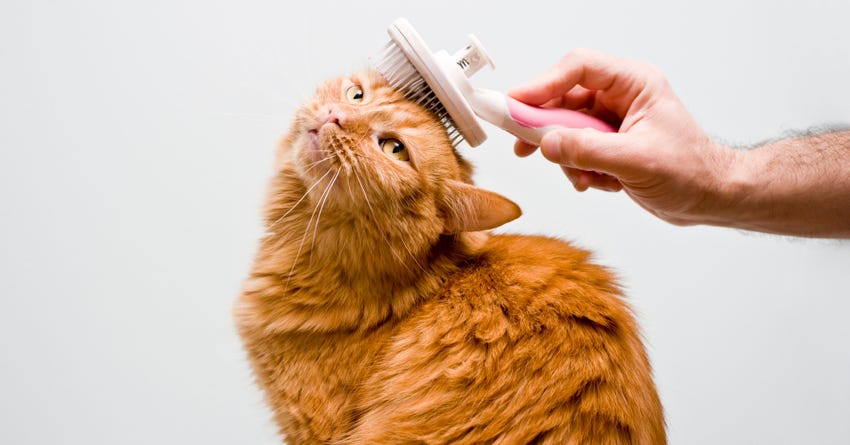
Brush in the direction of hair growth, starting at the top and working your way down to the tail. A rubber grooming glove or bristle brush works great for short-haired cats, and most of them love it like a massage. For long-haired cats, use a slicker brush after working out any knots with a wide-tooth comb
Particular attention should be paid to regions that are prone to matting, such as the area where the legs meet the torso, under the chin, in the armpits, and behind the ears. If you come upon a mat, carefully comb through the fur while holding it firmly at the base; never pull..
💡 Pro Tip: Avoid using scissors to cut a mat if it is too tight to comb out. You can easily cut your cat because the skin beneath a mat is frequently stretched. Instead, have it safely removed by taking your cat to a veterinarian or groomer.
Step 3: Trimming nails
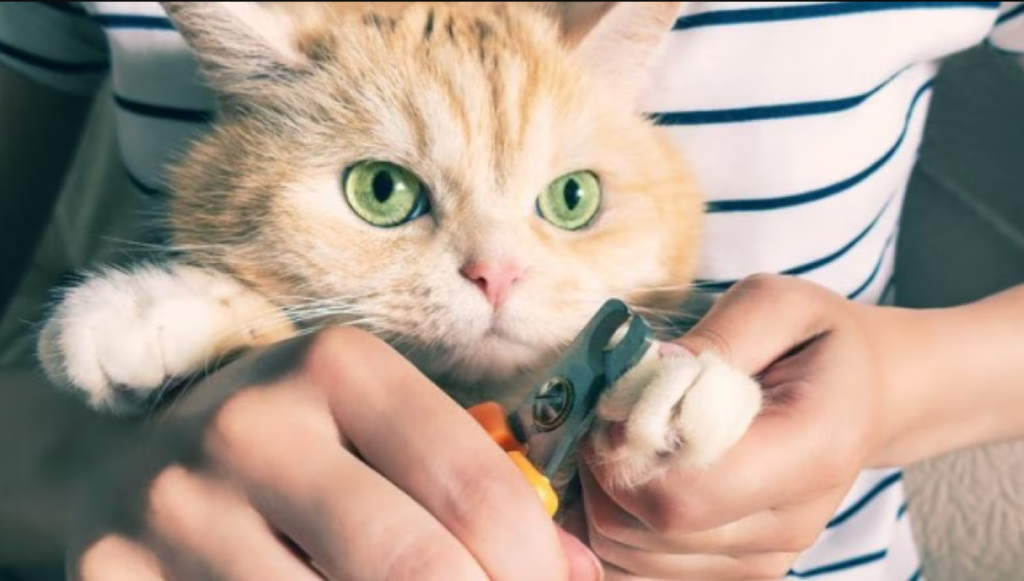
Cat nails are retractable and sharp. Gently press your cat’s paw pad to expand the claw in order to trim them. A transparent or white nail with a pink “quick” inside will be visible. Just the clear tip should be clipped, just below the pink area. Make use of purpose-made, sharp cat nail clippers.
One paw at a time should be trimmed, and each session should conclude with affection and a treat. The “purrito” technique, which involves tightly wrapping a towel over an exceptionally resistant cat, can help keep them motionless enough to work securely.
Step 4: Clean Ears
Cat ears that are in good health have a pale pink interior and no discharge or odour. To clean them, put a few drops of cat ear cleaning solution in the ear canal, rub the base for fifteen seconds, and then allow your cat to shake their head. Use a cotton ball to gently remove any loose wax or dirt.
Step 5: Care for the Eye Area
Some cats experience discharge building up in the inner corner of their eyes, particularly Persians and other flat-faced types. Using a fresh piece for each eye, gently wipe this away with a moist cotton ball. To prevent the spread of bacteria, never apply the same cotton ball to both eyes.
Step 6: Taking a bath (if required)
Use a few inches of lukewarm water to run a bath. To give your cat traction and prevent fear, place a rubber mat in the tub. Using a cup or mild spray nozzle, wet your cat from the neck down, then apply cat shampoo, gently lather, and rinse very well because soap residue irritates the skin.
Wrap your cat in a warm towel right away after the bath. If your cat can take the dryer, choose the lowest, coldest setting. However, most cats prefer to be dried with a towel rather than a hair dryer.
Expert Advice: Some cats react more favorably to a kitchen sink than a bathtub. It may seem less intimidating in the smaller area. If your cat is very resistant to both, give it a try.
Personal Tips for Grooming Difficult Cats
- Never use force to restrain a cat that is resisting. You’ll undermine confidence and probably get scratched. Take a break, pause, and try again tomorrow.
- To keep your cat occupied while grooming, use a lick mat covered with wet food or cat-safe peanut butter.
- Instead of a single, lengthy session, groom in small, five-minute bursts. Cats are not very patient.
- Your cat may be more sensitive to handling if they are elderly or have joint problems. Pay close attention to any indications of discomfort and be really careful.
- As soon as feasible, introduce grooming procedures to kittens. When a kitten is brushed from the age of eight weeks, it will grow up believing that this is normal.
Frequently Asked Questions About Cat Grooming
Q: How often should my cat be brushed?
A: Cats with short hair: once or twice a week. Cats with long hair: every day or every other day. To assist control loose fur, increase frequency for all coat types during the spring and fall high shedding seasons.
Q: My cat hates the brush. What can I try instead?
A: Try a rubber grooming glove — many cats who hate brushes enjoy these because they feel more like a gentle massage. Start by petting your cat with the glove before actually grooming, so the sensation feels familiar.
Q: Do cats require baths?
A: The majority of healthy cats do not require frequent baths. Their personal grooming is adequate. However, occasional bathing may be required if your cat is a show cat, has a skin disease, or gets into anything dangerous.
Q: How can I tell if my cat has ear mites?
A: A strong odor, frequent ear scratching, head shaking, and dark, coffee-ground-like discharge in the ears are all indicators of ear mites. See your veterinarian for the proper treatment if you think you may have ear mites; Home remedies are sometimes useless.
Q: Can I give my cat dog shampoo?
A: Never. Permethrin, which can trigger cat neurological responses, is one of the many harmful compounds found in dog shampoos. Always use a cat-safe shampoo that has been specially developed and labeled.