
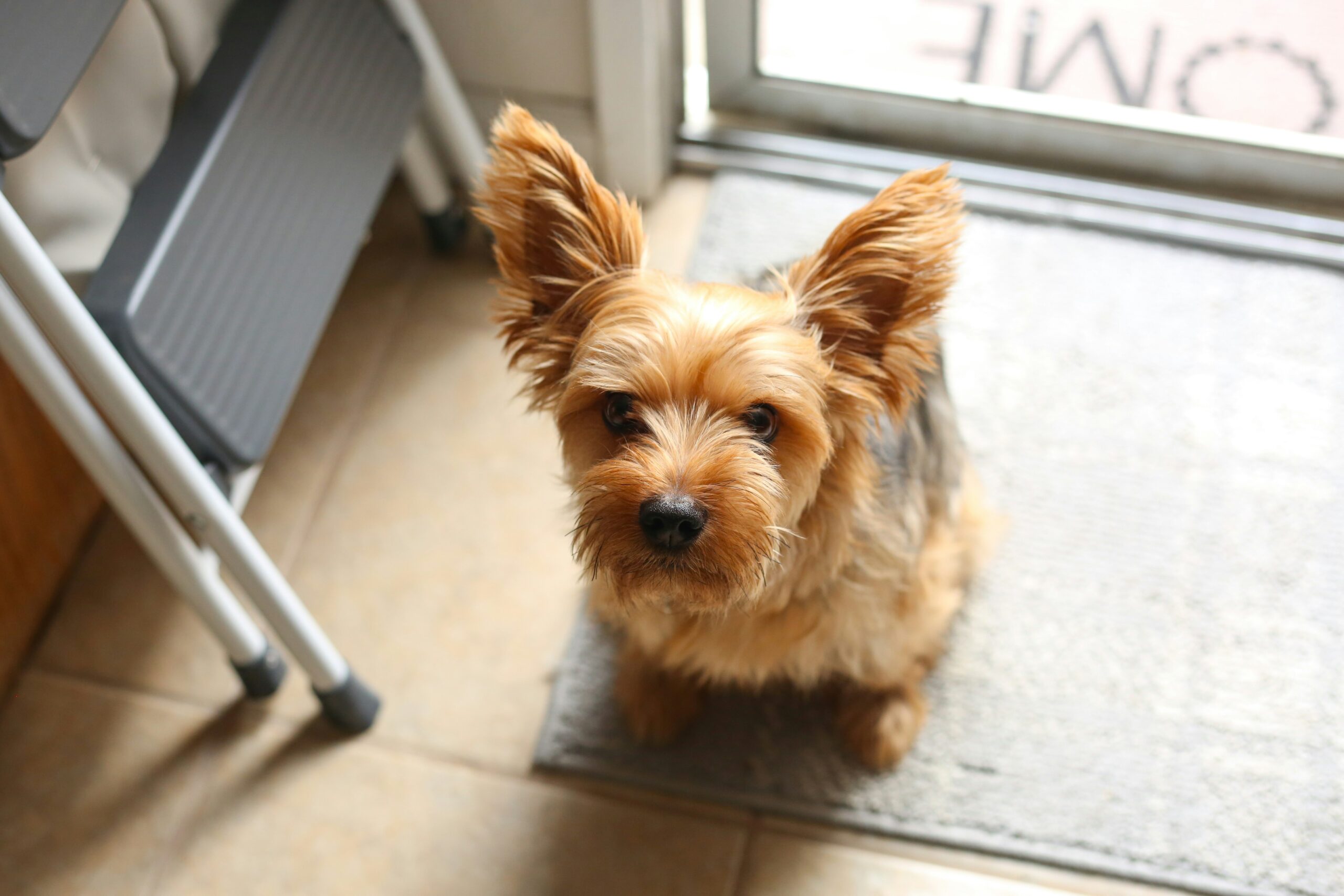
Mats are possibly the most annoying grooming issue a dog owner encounters. They seem to appear overnight, cause your dog pain, and if you treat them improperly, you run the risk of hurting your dog or damaging their coat. I’ve witnessed dog owners attempt to brush out terrible mats for an hour while their dog shuddered in agony, and this post is specifically meant to avoid that kind of situation.
The good news is that most mats can be safely removed at home with the correct equipment, methods, and a little perseverance. You won’t ever have to deal with a significantly matted coat again once you know why mats form and how to avoid them.
What Exactly Is a Mat?
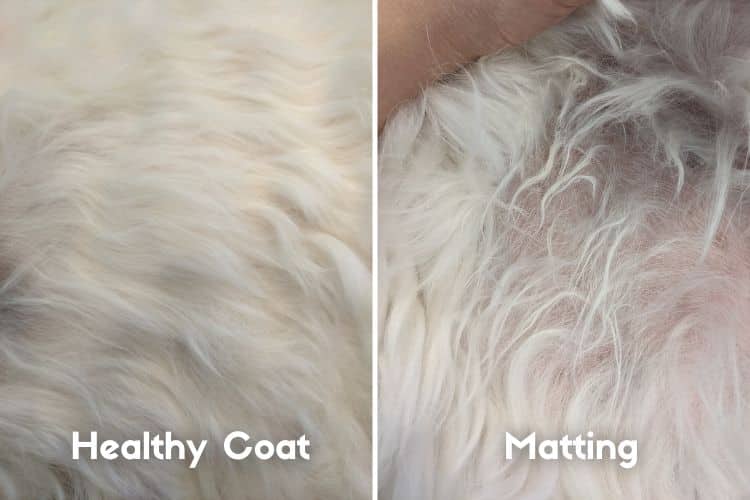
A mat is a firmly clumped, dense tangle of fur. They develop when loose, shed fur twists with surrounding fur, get stuck in the outer coat instead of dropping free, and eventually compresses. They most frequently appear where there is friction, such as between the leg and body, behind the ears, under the collar, in the armpits, under the belly, and at the base of the tail.
Mats deteriorate rapidly if left untreated. In just a few weeks, a tiny, soft mat can turn into a battered surface that is quite hard. A major welfare concern is pelted coats, which occur when mats have solidified into a coating against the skin. They are actually uncomfortable, limit movement, and trap moisture on the skin, which can result in infection.
Pro Tip: Check for little mats by running your fingertips through your dog’s coat after each brushing session. You can typically work them out without any special tools if you catch them when they are little (the size of a grape or less).
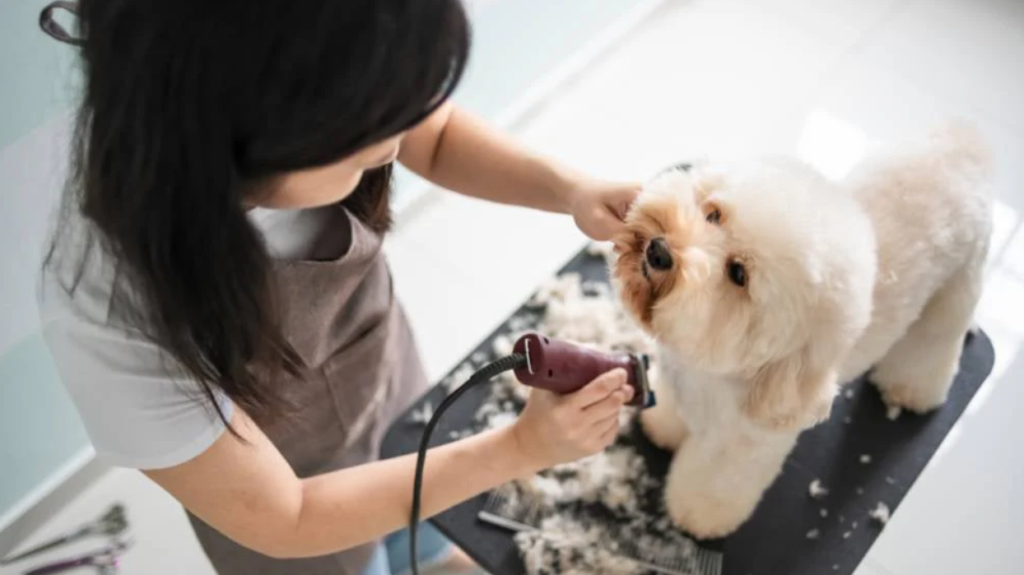
Before You Start: Assess the Severity
Not every mat is created equal. Prior to starting, evaluate your situation:
- A comb and conditioner spray can be used to work out a minor mat, which is small, soft, and not near the skin.
- A mat splitter or seam ripper and a brush can be used to remove a moderate mat, which is larger, somewhat stiff, and slightly away from the skin.
- Severe mat (tight, hard, near skin): Do not try to brush these out; instead, professional assistance or careful trimming are needed.
- Pelting: A professional groomer or veterinarian, not a home groomer, should handle this task (mats covering huge areas, coat inseparable from skin).
One of the most frequent causes of “brush burn”—a skin abrasion brought on by repetitive brushing friction—is trying to brush out a severe or battered carpet. Err on the side of seeking professional assistance if you’re unsure of what you’re dealing with.
Tools for Mat Removal
- Detangling spray or leave-in conditioner — loosens the fibers and makes them slippery
- Metal comb (wide-tooth) — your primary tool for working through mats
- Mat splitter — a small tool with a hooked, serrated blade that splits mats into smaller sections
- Seam ripper — a surprisingly effective alternative to a mat splitter
- Slicker brush — for finishing once the mat is removed
- Small scissors (blunt-tipped) — for absolute last resort cutting
- Plenty of treats
💡 Pro Tip: The best thing you can do before attempting mat removal is to use a liberal amount of detangling spray. Before you start working, let it sit for two to three minutes. With enough conditioner, many little mats will practically fall apart on their own.
Step-by-Step Mat Removal
Step 1: Soak and Spray
Use a lot of detangling spray on the mat and its surroundings. Using your fingers, work the spray into the mat to aid in its penetration. Give it two to three minutes. In order to keep your dog calm and help them link the process with good things, offer them goodies and pat them while you wait.
Step 2: Grasp the Base.
The most crucial method for removing mats is to always hold the base of the fur between the mat and your dog’s skin with two or three fingers firmly pressed against the skin. This stops the discomfort-causing tugging feeling from reaching the skin. Even if you are using the comb gently, you will harm your dog if you omit this step.
Step 3: Work outside in
You will further condense the skin if you start combing from the skin outward via a mat. Rather, start at the mat’s outermost points and gradually move inward towards the skin. Work a little deeper with each pass after teasing apart the outer fibers.
Press the mat’s base up against your skin.
Place the comb at the very tip of the mat.
To separate the outermost fibers, use short, light strokes.
Repeat after moving the comb a little deeper after clearing the tips.
Keep going until the comb can move freely around the space.
To smooth the coat, use a slicker brush at the end.
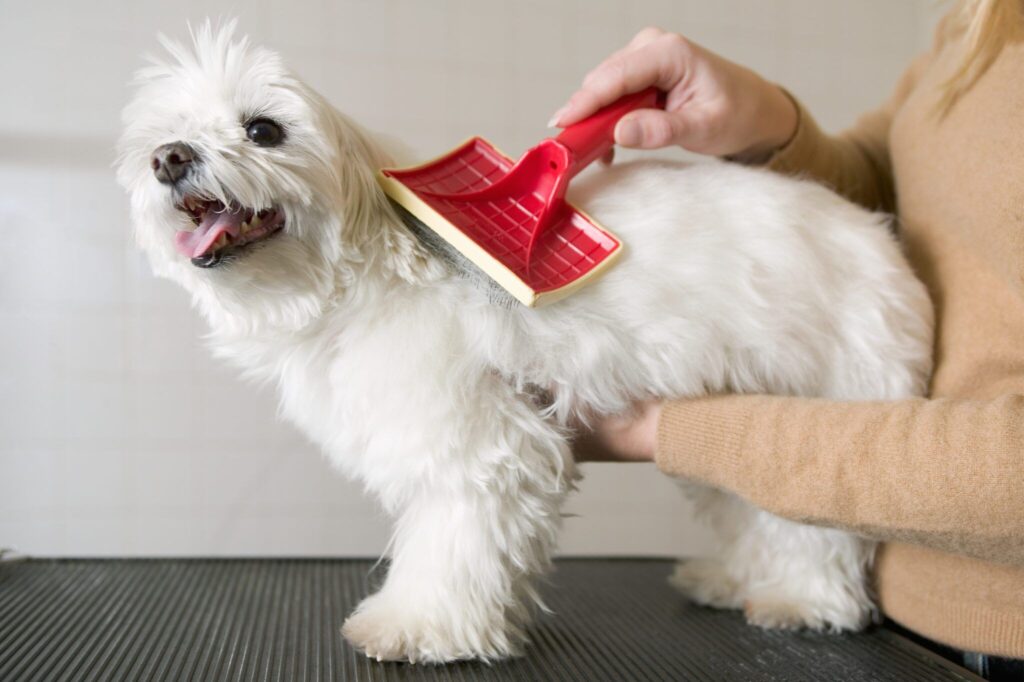
Step 4: Use a Mat Splitter for Larger Mats
Use a mat splitter to first separate mats into smaller portions if they are too big to comb through all at once. Pull outward (away from the skin) after inserting the mat splitter into the mat. This divides the mat into two or more tiny pieces that are far simpler to comb through.
The similar method may be applied to the rear of a seam ripper: insert the hook into the mat and pull outward. This low-cost product is highly recommended by many expert groomers.
Step 5: When to Cut
Sometimes it’s just not safe to split out or comb a mat. This is especially true for mats that have been there for a long time, are really tight, or are quite close to the skin. Cutting is the best option in these situations.
When cutting a mat, put your comb between the skin and the mat. As a result, the skin is shielded by a physical barrier. Make small cuts into the mat above the comb. Scissors should never be aimed at the skin.
Stop if the mat is so close to the skin that a comb cannot be used as a barrier between the mat and the skin. A professional is required to remove this mat with a clipper.
💡 Pro Tip: The skin beneath the mat is sometimes red and sensitive after removal. To relieve the region, apply a tiny bit of pet-safe aloe vera gel. Over the next several days, keep an eye out for any indications of infection.
Mat Prevention: The Real Solution
Preventing mats from forming in the first place is the best method to deal with them. This is a good preventive regimen:
- Depending on the type of coat your dog has, brush them at the appropriate frequency. Medium-coated dogs require brushing every two to three days, whereas long and double-coated animals require brushing every one to two days.
- During each brushing session, pay close attention to regions that cause friction, such as the crotch, under the collar, armpits, and behind the ears.
- Check for building mats underneath your dog’s collar by taking it off for brief periods of time each day.
- Regularly apply a leave-in conditioner spray. Because of this coating, the fur fibers are less likely to cling to one another.
- Avoid keeping your dog wet for long periods of time. Compared to dry fur, damp fur mats considerably more quickly.
- Look for burrs, seeds, and plants after outdoor activities.
- Avoid keeping your dog wet for long periods of time. Compared to dry fur, damp fur mats considerably more quickly.
- Look for burrs, seeds, and plant material trapped in the coat following outdoor activities; these are significant mat triggers.
- Depending on the requirements of your breed, schedule routine professional grooming. Every six to eight weeks, the majority of long-coated dogs should visit a groomer.
What Professional Groomers Wish You Knew About Mats
Professional groomers deal with matted dogs on a daily basis, and they wish more dog owners were aware of the following:
“”Shave-downs” are not penalties. Cutting a dog’s coat very short and starting over is frequently the only humane solution when it is excessively matted. We refer to this as a shave-down. Groomers do this because maintaining a matted coat hurts the dog, although some owners feel bad or angry about it. Pain doesn’t go away on its own; short hair grows back.
There are limits to dematting. Because prolonged dematting sessions can be uncomfortable and even painful for dogs, reputable groomers have a “dematting policy” that restricts how long they can spend removing mats. A shave-down is frequently the most compassionate option if a dog arrives excessively matted.
Appointments for prevention are less expensive than those for dematting. Because highly matted dogs require more time and skill, many groomers charge more. Emergency dematting procedures are significantly more expensive than routine maintenance grooming.
Frequently Asked Questions
Q: When I try to brush out a mat, my dog yells. How should I proceed?
A: Quit right now. Your dog is in pain when it yells. Examine the mat; if it is too close to the skin or too tight, professional or veterinary care is required. If you decide to attempt again, proceed in much smaller increments, grip the base more firmly, and apply additional detangling spray.
Q: Do certain breeds have a higher risk of matting than others? A: Indeed. Matting is particularly common in breeds like Poodles, Doodle mixes, Shih Tzus, Maltese, Cocker Spaniels, and others with long, fine, or wavy coats. Breeds with double coats do not mat in the same manner, but if they are not routinely deshedded, they develop “compaction” in their undercoat.
Q: Is it possible to eliminate mats with coconut or olive oil?
A natural substitute for commercial detangling spray, they can assist in loosening minor mats. After applying a tiny bit on the mat and letting it sit for a few minutes, comb through it. You’ll probably need to give your dog a bath afterwards because oil might leave residue that attracts dirt.
Q: Being boarded caused my dog to get matted. How should I proceed?
A: Take care of the mats as quickly as gently as you can. See a groomer or veterinarian if the mats are severe. In the future, you might inquire about boarding facilities’ grooming procedures and whether brushing is a part of them for pets that stay longer.
Q: How can I take off a mat that is in close proximity to my skin without using scissors?
A: Without the right equipment and knowledge, doing this at home is extremely challenging and dangerous. See a professional groomer if there is no space to work into and the mat is flush against the skin. You run the risk of cutting your dog if you try to cut a mat this close to the skin without using the proper method.