

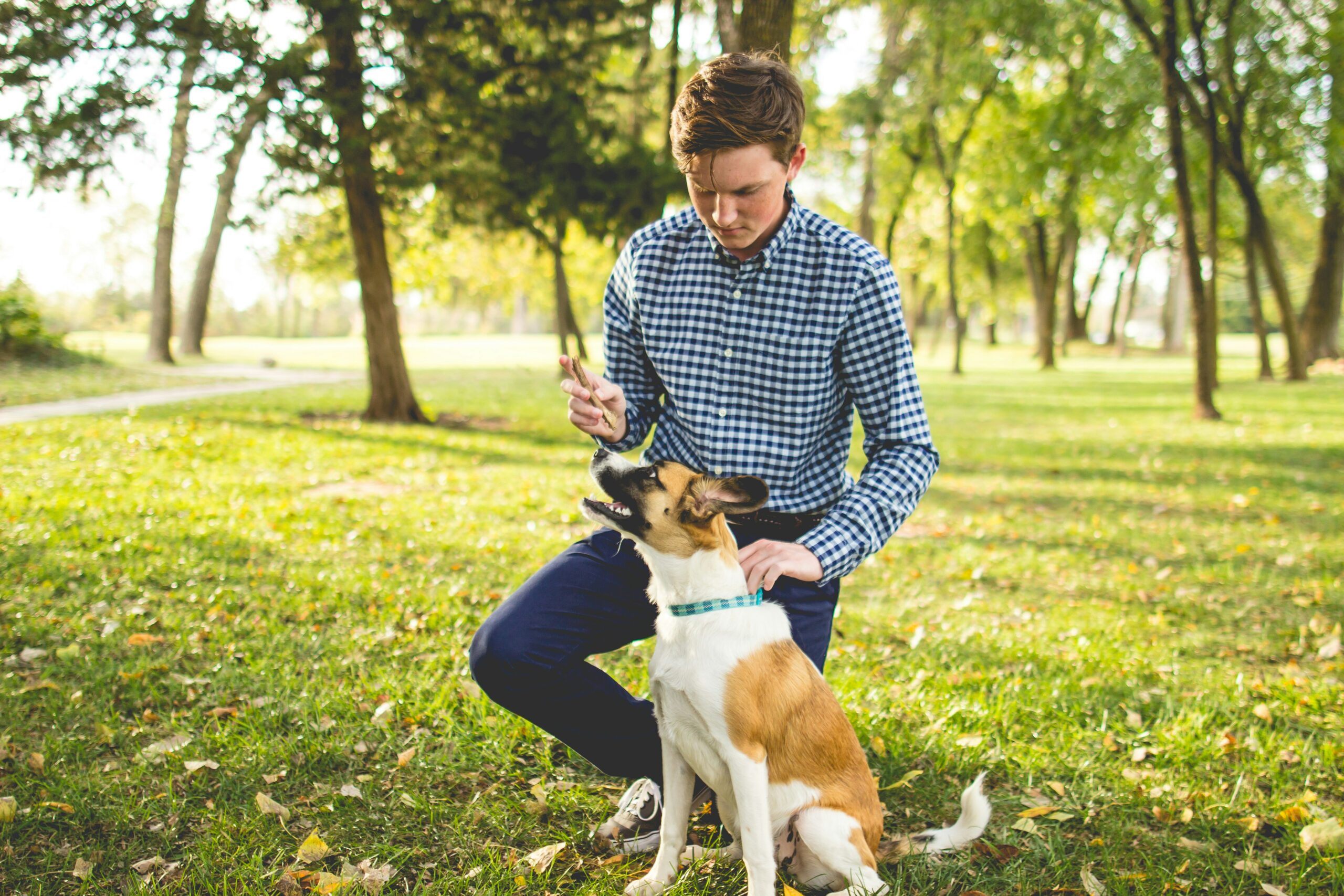
I won’t sugarcoat it: teaching a dog requires a lot of goodies, perseverance, and consistency. The truth is, though, that it’s also one of the most fulfilling things you can do with your pet. I’ve worked with dogs for years, and I’ve made many mistakes along the way, so I know what works and what just sounds nice on paper.
Understanding Your Dog’s Natural Behaviors First
Understanding your dog’s innate thoughts and behaviors is essential before you even consider teaching commands. Dogs are group animals with inbuilt instincts that date back thousands of years; they are not miniature humans in fur coats.
Your dog uses body language to communicate with you all the time. That wagging of the tail? It’s not happiness all the time. Those pinned-back ears? Your dog may be nervous. Training becomes lot simpler when you begin to pay attention to these cues since you are working with, rather than against, your dog’s natural communication style.
Boredom, inactivity, or uncertainty about your true desires are the main causes of behavioral problems. A well-behaved dog is typically exhausted. I can’t even begin to count the number of “problem” dogs I’ve worked with where a daily walk of an additional 20 minutes was the true remedy.
The Power of Choosing the Right Keywords
This is where many people make mistakes: they use words that are too similar to daily speech or inconsistent commands. Your dog is learning to link certain sounds with particular actions; they do not speak English.
Keep it brief and clear. When feasible, use single-word orders such as “Sit,” “Stay,” “Come,” “Down,” and “Heel.” Instead of “sit down” instead of “come here boy” instead of “would you please stay put.” One syllable, said consistently.
With my first dog, I had to learn this the hard way. Sometimes I would say “come here,” and other times I would say “come,” or I would say “down” to get him to lie down or get off the couch. I had no notion what I wanted, poor boy. Training picked up speed once I standardized my orders.
Select terms that are distinct from one another. “Sit” and “stay” have quite different sounds. However, “shake” and “break” could be confusing to your dog. If your dog’s name is “Kit,” you might want to avoid using the command “sit.”
Building a Training Routine That Actually Sticks
It’s all about consistency. And by everything, I mean it. You are essentially starting over every time you work out for 20 minutes once a week. Rather, incorporate fitness into your everyday schedule in tiny, doable portions.
Morning schedule: Practice a few simple commands before breakfast. Use food to inspire your dog. Before setting the bowl down, make them sit. Allow them to remain while you cook for them. This may take two minutes, but it strengthens daily training.
Walk time training: Don’t just go around the block aimlessly. Take walks as an opportunity to train. Work on “sit” at crosswalks, practice the “heel” command, and give praise or rewards for appropriate leash conduct.
Evening wind-down: Before going to bed, dedicate ten minutes to practicing new or difficult commands. Your dog is frequently less energetic and more attentive when they are a little sleepy.
Making training seem like a natural part of life rather than an unpleasant chore is crucial. Instead of associating training time with work, my dog now associates it with enjoyable bonding moments.
Positive Reinforcement: Why It Wins Every Time
I will simply state that training centered on punishment is out of date and unnecessary. You don’t have to show your dog who’s in charge or control them. You must demonstrate to them that positive behavior has positive results.
The treat approach is effective. Yes, in the long run, your dog should react without goodies, but in the early stages of training? Eat a lot of those little training snacks. As soon as your dog complies with your request, indicate it with a clicker or a phrase like “yes!” and give them a reward in a matter of seconds.
Time is of the essence. Your dog won’t know what they’re getting rewarded for if you give them a treat 30 seconds after they sit. The reward must occur one to two seconds after the intended behavior.
Treats should be phased off gradually. Use occasional rewards once your dog consistently complies with a command. They may receive a favorite toy, a treat, or just compliments. Because your dog never knows when the incentive will be given, this actually strengthens the behavior.
Common Mistakes Everyone Makes
I’ll save you the trouble by pointing out the errors I frequently see:
repeating instructions. You’ve just taught your dog that they don’t have to react until you say “sit, sit, sit, sit” four times. Once you’ve said it, wait, and if necessary, lead them into position.
training when preoccupied or upset. When your dog is overstimulated or you are frustrated, avoid training. Nothing will stay; you’ll both just become irritated.
Too much, too soon. Weeks and months, not days, are used to calculate training. Don’t compare your dog to other dogs; instead, celebrate little victories.
Family members’ inconsistent behavior. Your dog will be completely perplexed if you yell “off” when the dog jumps but your partner responds “down,” and your child finds it amusing and encourages it. The same directives and guidelines must be followed by every member of the household.
The Reality Check
The truth is that certain dogs are simpler to train than others. Some breeds are more driven by their desire for food, some are more people-pleasing, and yet others are stubborn little mules (I say this with love). It’s quite acceptable if your chronology differs from someone else’s.
Perfection is not the goal of training. It’s about developing trust and communication with your dog. Giving them structure and cerebral stimulation actually makes them happy and less nervous.
On certain days, your dog will be flawless. On other days, they’ll pretend that they’ve never heard the term “sit” before. That’s typical. Never give up.
Where to Go from Here
Begin with the fundamentals: come, down, sit, and stay. Before attempting more difficult tricks or actions, master those. Dogs have short attention spans, therefore training sessions should last no more than ten to fifteen minutes.
Don’t be afraid to consult a professional trainer if you’re having trouble with a particular behavioral issue, such as aggression, separation anxiety, or excessive barking. Sometimes you need specialist knowledge and an outside viewpoint.
Above all, keep in mind the original motivation for your puppy purchase. They are friends to cherish and love, not tasks to be completed. Instead of becoming a cause of stress, training should improve your connection.
Your dog wants you to be content. All they need is for you to demonstrate how. You can succeed if you have perseverance, consistency, and a pocket full of sweets.
Have questions about specific training challenges? Drop them in the comments below. I love hearing about your training journeys—the successes and the hilarious failures alike.