
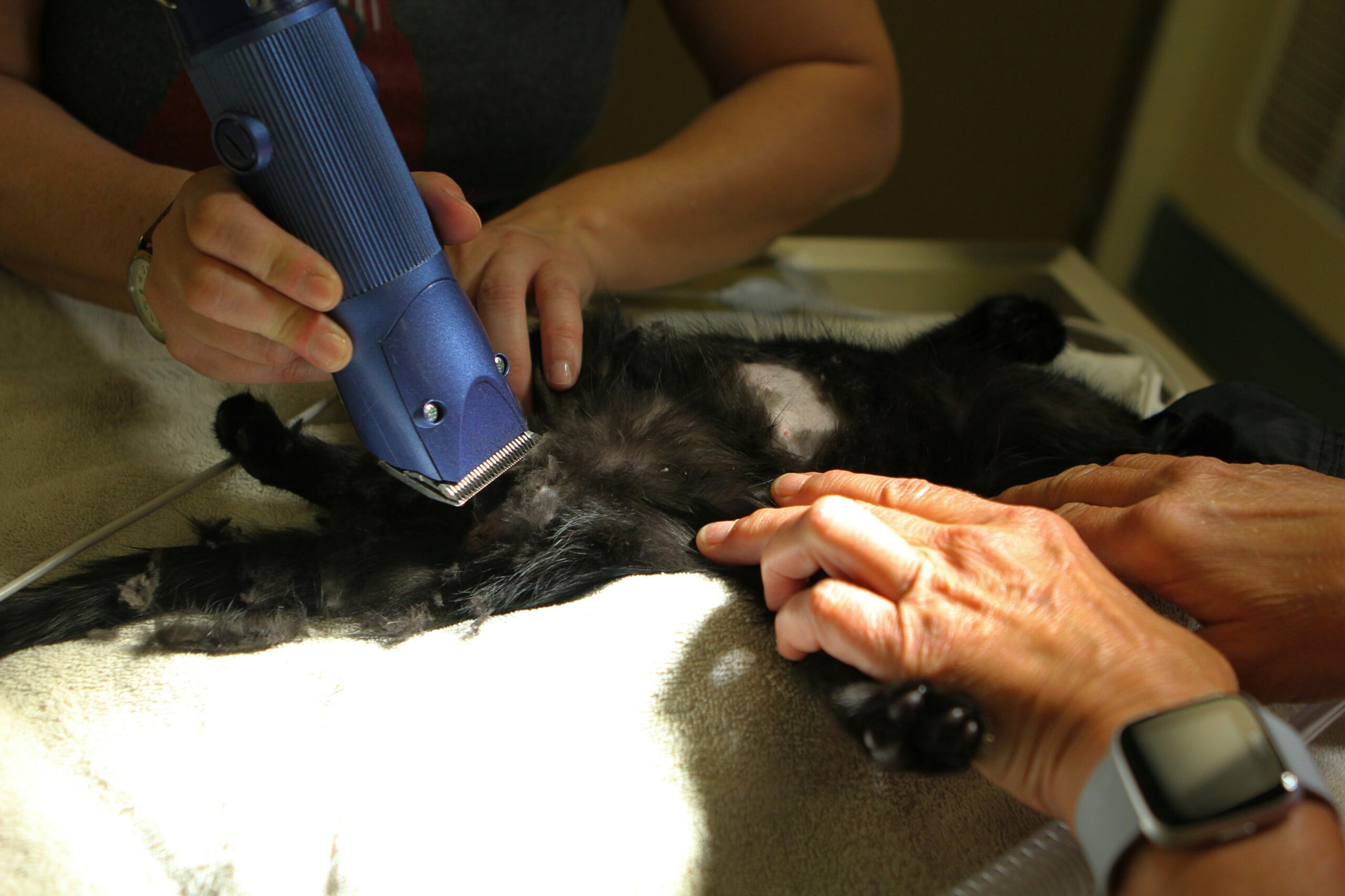
If you’ve ever attempted to trim your dog’s coat only to have them run away as soon as the clippers buzz to life, you already know that noise, rather than ability, is typically the biggest barrier to at-home grooming. A calm, food-motivated dog might become a shivering wreck hiding beneath the bed with only that low mechanical hum.
One of the major changes in at-home pet grooming this year is the newest generation of cordless, silent clippers, which are designed to answer just that issue. More pet owners are switching from the outdated gas-powered, wired clippers their groomer used to use to small, whisper-quiet devices made especially for small homes and fidgety pets.
Why Noise Is a Bigger Deal Than Most Owners Realize
A clipper motor operating at a pitch that seems like “background noise” to us can really be frightening to dogs and cats since they have a far wider frequency range than humans. When you combine it with vibration across the skin, you have two stressors occurring simultaneously. This is a major reason why many pets equate grooming with fear rather than routine.
This is more important than comfort. A pet that moves erratically increases the chance of nicks, unequal cuts, or an owner being bitten or scratched in the middle. Because a calm dog stays motionless, quiet, low-vibration clippers not only improve the experience but also increase safety.
What Makes These Clippers Different
Conventional clippers were made with raw cutting power in mind, treating noise as an inevitable side consequence. The more recent cordless models reverse that order of importance:
- Noise levels under 50 decibels — roughly the volume of a quiet conversation, compared to 60–70 dB on standard clippers.
- Reduced vibration motors — often ceramic or titanium blade systems that cut with less mechanical shake against the skin.
- Cordless, rechargeable design — no cord to trip over or startle a dog when it drags across the floor, and no being tethered to an outlet in a bathroom or garage.
- Adjustable guard combs — letting you set coat length without swapping blades mid-session, which cuts down on stop-start noise triggers.
- Lightweight, ergonomic bodies — easier to control one-handed while your other hand steadies or reassures your pet.
What to Look for When Buying One
Not all clippers that are advertised as “quiet” are. Here are some things to look at before purchasing:
Look for a particular number rather than just the word “quiet” on the box to determine the decibel rating. A good benchmark is less than 50 dB.
Runtime per charge: on a full trim, anything shorter than 60 to 90 minutes will leave you scrambling in the middle of the room.
Blade material: For extended sessions, ceramic blades stay cooler and dull more slowly than regular steel blades.
Blade heads that are washable or detachable make clean-up and blade oiling much simpler.
Most owners find that a weight of less than 200g is comfortable to maintain for more than 20 minutes.
Guard comb range: If you have several pets, having additional length alternatives will allow you to be more adaptable to diverse coat kinds.
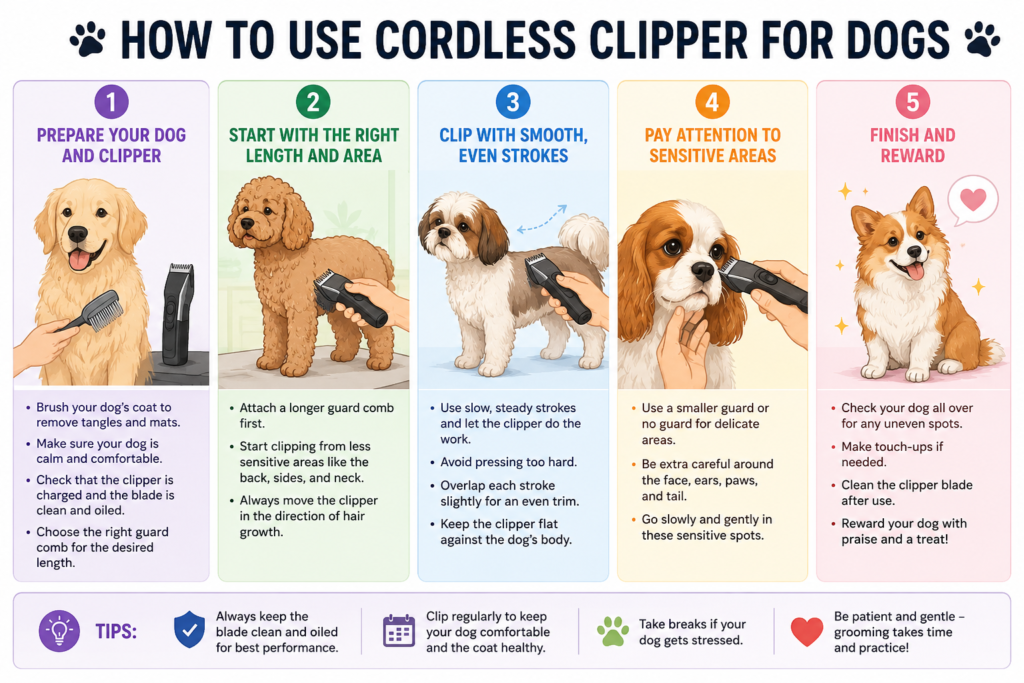
How to Introduce a New Clipper Without Triggering Fear
A pet that has previously had negative encounters with grooming tools may be frightened by even a quiet clipper. A gradual introduction has a significant impact:
Step 1: Let them look at it while it is turned off. Allow your pet to sniff the clipper after placing it on the floor or a table. Give a treat to quell curiosity.
Step 2: Instead of turning it on them, turn it on close by. Turn it on for a short while while your pet is eating or chewing a toy a few feet away. Instead of using restriction, this associates the sound with a neutral or pleasant state.
Step 3: Touch their coat with the clipper while it is powered off. Before introducing sound, acclimatise them to the tactile experience.
Step 4: Mix touch and sound in brief bursts. After using the clipper for two to three seconds on a low-sensitivity area, such as the shoulder, stop and give yourself a treat. Extend the sessions gradually.
Step 5: Don’t work in one lengthy groom, but rather in short sessions. Instead of attempting to finish a full coat in one session, try to trim in five-minute increments over a few days, especially for the first few applications.
Common Mistakes Owners Make
hurrying the initial meeting. The entire purpose of a silent clipper is to provide a more relaxed experience; if you attempt to complete a complete trim on the first day, you will lose the benefit.
neglecting to maintain the blades. When blades become dull or clogged with fur and oil, even quiet clippers become louder and more vibration-heavy. After each use, clean and lubricate the blades.
cutting through matted fur. No matter how quiet the instrument is, clippers can snag and can yank at the skin, frightening even the most peaceful pet. Before you clip, brush out the mats or detangle them with scissors.
disregarding runtime restrictions. If you let the battery run out in the middle of the chamber, you will have to restart later, which will reset any peaceful mood you may have developed.
Is It Worth Switching From Your Old Clippers?
There is no pressing need to replace your current clippers if they are functioning properly and your pet can handle clipping without experiencing any stress. However, a silent cordless model is one of the biggest improvements you can make to your home grooming kit if grooming day has turned into a wrestling match or if you’ve been delaying DIY trims because of your pet’s reaction to the noise. It’s a little investment that frequently results in shorter sessions, less stress-related mishaps, and a pet that eventually begins to identify grooming with routine rather than anxiety.
At home, have you switched to a silent clipper? Tell us in the comments how your pet’s grooming day was affected.