
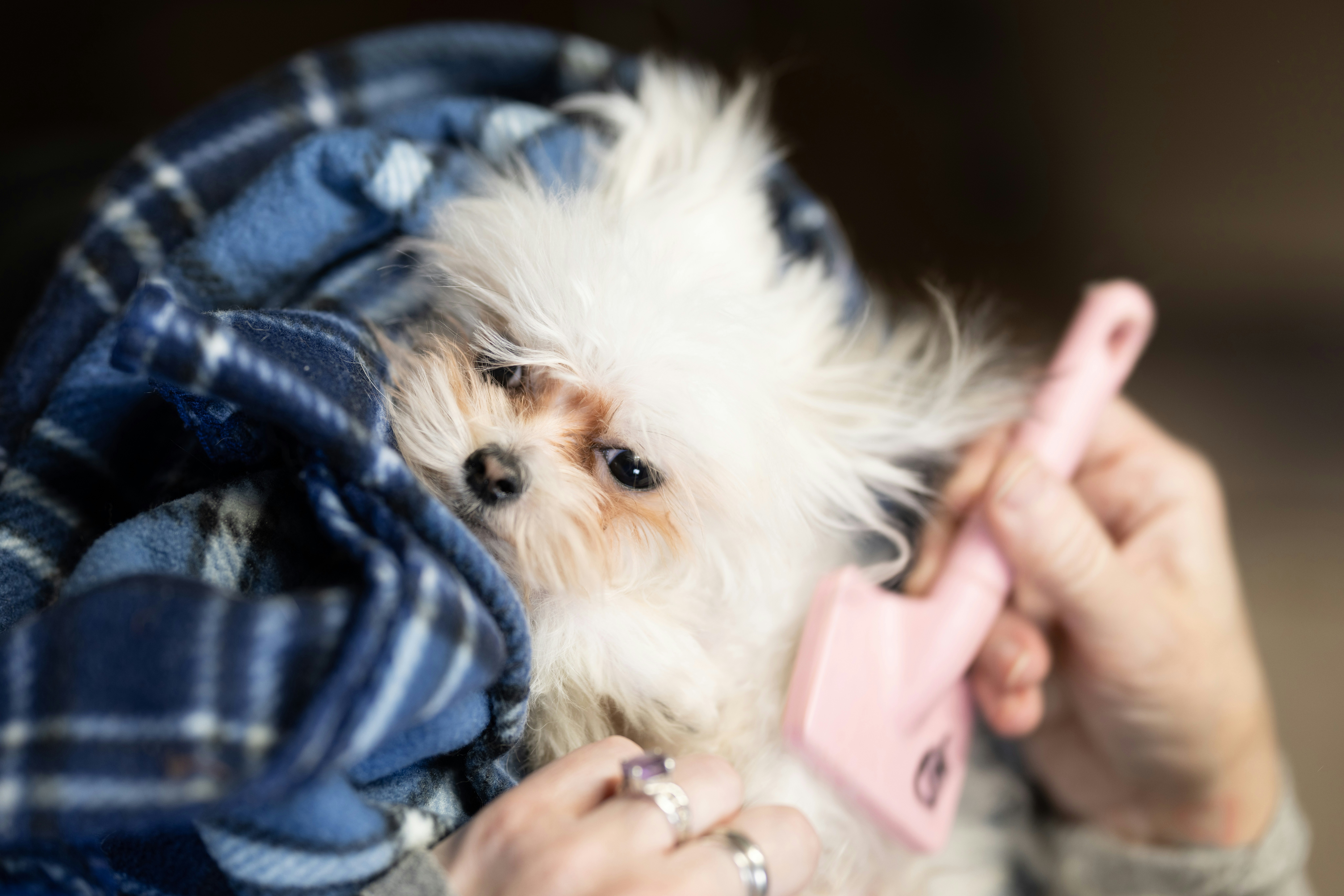
There is no such thing as “shedding season” for double-coated dogs, whether you live with a husky, golden retriever, German shepherd, corgi, or any other breed. All year long, there is just shedding, ranging in intensity, with a few dramatic ‘coat blow’ weeks in the spring and autumn that make it feel like you’re re-carpeting your home with dog hair.
Here, a typical slicker brush, the kind that works well on a dog with just one coat, literally just touches the surface. A dense, insulating undercoat lies beneath a coarse, water-resistant topcoat in double coats. Only the top layer is managed by routine brushing. The true shedding issue is in the undercoat, which is why one of the most talked-about additions to home grooming kits this year is a special de-shedding tool.
Why Double Coats Need a Different Tool Entirely
In order to keep your dog warm in the winter and, rather paradoxically, cool in the summer by controlling airflow, the undercoat serves as insulation. A few things occur when old undercoat hair is improperly removed:
It accumulates and presses up against the skin, trapping moisture and causing irritation or hot patches.
Because trapped dead fur obstructs airflow, it provides insulation against your dog’s ability to cool down in hot weather.
Instead of coming out cleanly during a grooming session, it ends up on your clothes, floors, and furnishings.
A typical brush is just not made to get past the topcoat and retrieve loose undercoat fur without harming the healthy guard hairs above it. This is the purpose of a de-shedding tool.
How These Tools Actually Work
One of two designs is used by the majority of de-shedding tools:
Undercoat rakes are rows of rounded-tip, slightly slanted pins that comb through the topcoat to grab stray undercoat fur and pull it away without cutting hair.
The style most commonly associated with the well-known shedding-tool brands is edged de-shedding combs, which have a fine-toothed metal edge that skims just beneath the topcoat and lifts loose undercoat in a shaving-like motion (without actually cutting the coat). This style typically removes the most volume in a single pass.
A self-cleaning or “ejector” mechanism, a button that pushes the accumulated fur off the teeth in a single motion, is included to several of the most recent tools available this year. This eliminates the need for you to stop every 30 seconds to manually remove matted hair.
What to Look for When Choosing One
Things to Consider When Selecting a Coat-Width Size. Small, medium, and large head widths are commonly available for tools. A Husky-sized tool may be too forceful for a smaller dog, while a Corgi-sized tool will be ineffective on a Husky.
teeth that are rounded rather than sharp. Instead of cutting skin, the tool should lift the undercoat. Sensitive parts like the belly and inner legs can get nicked by inexpensive models with sharp-edged teeth.
self-cleaning button and ejector. The difference between a 10-minute and a 30-minute session is this one feature.
ergonomic grip. A handle that is pleasant to grip is more important than it may seem because you will be providing repeated pressure and motion for several minutes at a time.
ergonomic grip. A handle that is pleasant to grip is more important than it may seem because you will be providing repeated pressure and motion for several minutes at a time.
design that is suitable for breeds. In contrast to mild double coats (Goldens, Labs, Shepherds), some tools are specifically calibrated for thick double coats (Huskies, Malamutes, Chow Chows). Compare the product description to the sort of coat your dog has.
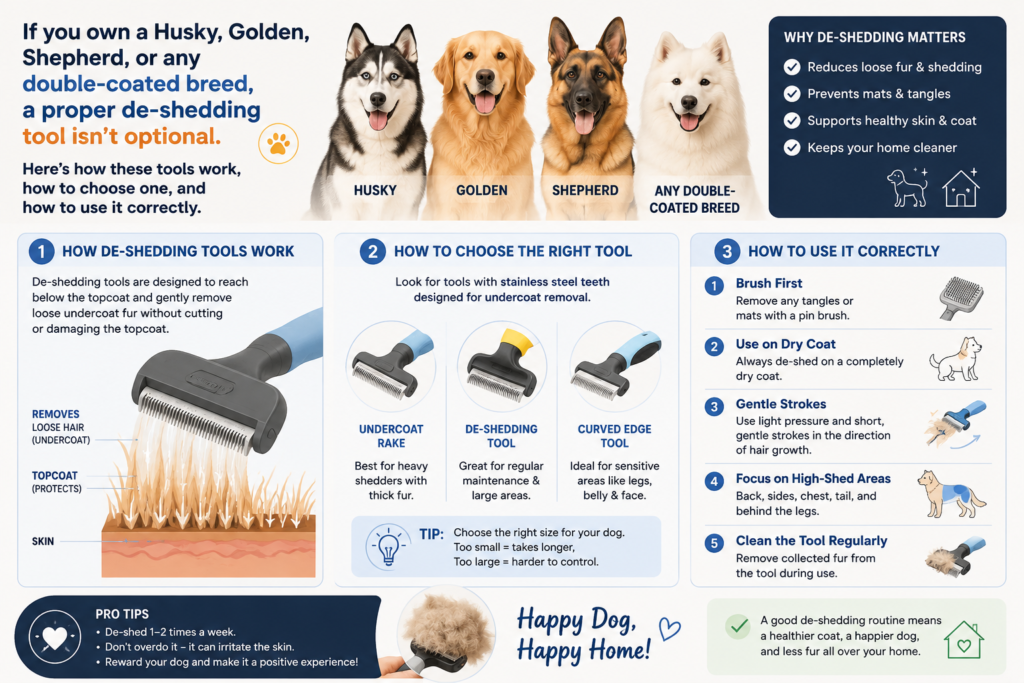
How to Appropriately Use a De-Shedding Tool
Step 1: Apply a dry, brushed-out coat first. To remove any surface tangles or dirt, first run a slicker brush over the topcoat. When a coat is already mat-free, de-shedding tools function best.
Step 2: Move in the direction of hair growth. Pulling against the grain can cause skin irritation and discomfort.
Step 3: Apply steady, mild pressure. Instead of scraping the flesh, you are lifting loose fur. Ease off if you’re applying enough pressure to cause redness.
Step 4: Proceed section by section. Instead of attempting to cover the entire dog in long strokes, divide the coat into manageable zones, such as the back, sides, chest, and hindquarters. This is easier for you both and produces more consistent outcomes.
Step 5: Steer clear of delicate areas. The skin is thinner around the base of the tail, inner thighs, and belly. Instead of using the de-shedding tool in these areas, use a softer, slicker brush.
Step 6: Use a moist cloth or grooming wipe to finish. This gives the coat a polished, smooth appearance by picking up any last bits of loose hair.
How Often Should You Use It?
For the majority of double-coated breeds, shedding can be controlled once or twice a week throughout regular months. Bumping up to every other day for a few weeks during seasonal coat blow (usually spring and autumn) significantly reduces the amount of fur that goes up on your furnishings as opposed to in the garbage.
Typical Mistakes to Avoid
applying it to a damp coat. The majority of de-shedding tools are made for dry fur; wet hair clumps differently, which can make the tool less efficient or more difficult to use.
omitting the pre-brush. Your dog may find it uncomfortable and less efficient to run a de-shedding tool directly over a matted or tangled coat.
excessive shedding at a single session. While it may be tempting to try to get it “all out” in a single session, your dog’s natural insulation may be compromised if the undercoat is overly thin. One marathon session is generally the best.
applying a heavy undercoat breed to a topcoat-sized tool, or the other way around. The most frequent cause of owners’ perception that the tool “isn’t working” is mismatched sizing.
The Reward
The same results are consistently reported by owners who incorporate a proper de-shedding tool into their routine: noticeably less loose fur around the house, a shinier and healthier-looking coat, and—often overlooked—a more comfortable dog, particularly during hot months when trapped undercoat makes it more difficult for double-coated breeds to regulate their body temperature. If you live with a double-coated dog, this is one of the best additions to a home grooming kit for a comparatively little expenditure.
Do you own a Shepherd, Golden, or Husky at home? How do you handle coat blow season? Let us know in the comments.